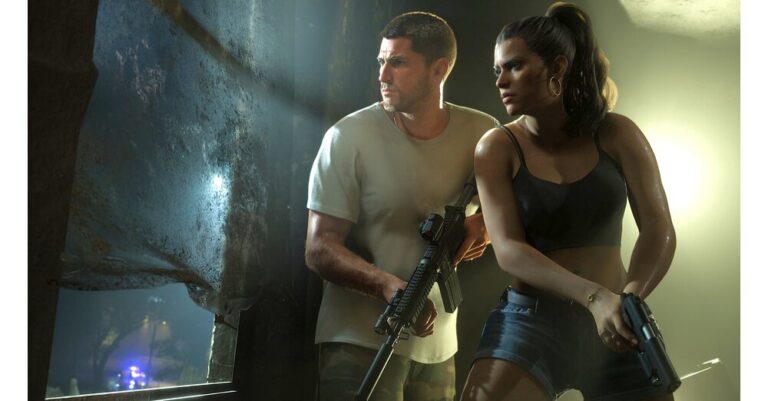
On August 27, 2026, Rockstar Games showcased the first real gameplay from Grand Theft Auto VI with its roughly 26-minute “Extended Look” – captured entirely on PS5 and initially exclusive to Netflix, then officially released shortly after on the Rockstar Newswire and YouTube. Since then, one topic has dominated discussions: How much everyday life and simulation can a GTA game truly handle? GameStar dedicated a video and a companion article to this very question – we'll break down the key points for you.
Which Realism Features Did the GTA 6 Reveal Actually Show?
At the core is an in-game health app on Jason and Lucia's phones that tracks sleep, diet, and even the weight of both protagonists. Those who stay up for days on end, engage in a multi-day police chase, or simply don't get enough sleep will see the consequences visibly on their characters' faces – tired eyes, pale skin, visible exhaustion. Rob Nelson, Co-Studio Head at Rockstar North, also confirmed that regular gym visits improve stamina and health, while poor sleep and an unbalanced diet have negative effects. In addition, there are countless detailed observations from the reveal, such as background NPCs spraying each other with sunscreen, or passersby with their own recurring daily routines.

Is Rockstar Going Too Far – Or Is There Even More Realism To Come?
This very question is currently fueling the community debate. The good news for those who primarily love GTA as a chaos sandbox: According to Rockstar, gym visits, diet, and sleep are not mandatory. The game is said to be fully playable without regularly exercising – so GTA 6 won't suddenly become a fitness management simulation. At the same time, Rockstar itself has already pulled the plug on one feature: A system initially planned where players had to actively buy food to fill Jason and Lucia's shared refrigerator was cut before release. Nelson justified this by stating that they are seeking “a good balance between realism and game accessibility.” This shows that Rockstar also sets its own limits – apparently only where realism turns into pure micromanagement fiddliness, not with systems that create atmosphere and tangible consequences.

For comparison, it's worth looking at Rockstar's history. GTA 4 (2008) primarily relied on the Euphoria physics engine for credible NPC reactions; food at fast-food stands replenished Niko Bellic's health, but there was no compulsion to sleep. GTA 5 (2013) introduced stat bars like stamina or lung capacity, as well as yoga sessions for Michael, with its three protagonists – yet much of it remained more of a supplement than a system with real consequences. Rockstar's own Red Dead Redemption 2 (2018) significantly raised the bar for simulation depth within its portfolio, featuring a growing beard, weight changes due to diet, and a horse that required regular care. Against this backdrop, GTA 6 appears less like a radical break and more like a consistent continuation of a trend Rockstar itself initiated long ago – just in a modern, urban open world instead of the Wild West.
From our perspective at Scene Gamers, this approach is precisely the right one: realism systems that remain optional and primarily make the world more believable, rather than slowing down gameplay, can truly benefit GTA 6. It would only become critical if the core fun and classic chaos gameplay suffered under too much management – precisely the line that Rockstar itself apparently recognized long ago with the scrapped refrigerator system.
Source: GameStar
What do you think: Does more everyday realism make GTA 6 more exciting for you, or should Rockstar lean more into classic chaos gameplay when it releases in November? Share your thoughts in the comments!

Comments (0)
No comments yet — be the first to share your take.