Captain John Price isn't just a character in Call of Duty; he's an institution. Since Modern Warfare 2, players have looked at this gray-haired, mustachioed war veteran and known: things are about to get serious. But who is really behind this iconic character? How is such a figure brought to life? Barry Sloan, the actor behind Price, recently shared in an open interview how to create a game character with a real soul—and why AI will never be able to do it.
The Black Box: Acting in its Purest Form
If you've never heard of motion capture or think it's just “a bit of acting in front of a green screen,” Sloan has to correct you. Performance capture is the antithesis of luxury. It's performance purism in the most extreme sense.
Imagine a film set – but without a set. No backdrops, no furniture, no weapons you can hold. No helicopters, no real military base. Nothing but you, a few other actors, and a lot of black walls. Sloan compares it to minimalist stage theater, and the comparison is brilliant: In the “Black Box” of the motion-capture studio, you can't cheat. No impressive costumes to help you get into character. No production design to make the scene. If you're not good, literally everyone sees it. Instantly.
The only real anchor point during a take is the eyes of the other actor. That's all you have. That's why the performance has to be brutally authentic – it's about real emotions, real reactions, real subtext between the lines.
And this is where the real magic begins: The technical departments at Infinity Ward can later visually perfect everything in post-production. They can set the lights, make the hair flow, draw the scars. But what can't they do? Invent the emotional depth of a performance. The vibrations that lie beneath the words. The moments when Captain Price is a real, wounded human – not just a soldier. That has to be real, or it doesn't work.
The Bleak Truth About Artificial Intelligence
Here, Sloan becomes thoughtful – and concerned. AI can generate technically flawless content. Dialogues that are grammatically perfect. Movement patterns that are anatomically correct. But something fundamental is missing: the soul. AI creates interchangeable, generic content because it's not about genuine storytelling. It's about efficiency, about optimization.
But humans need genuine storytelling. We need reactions that are unexpected. We need the imperfection of a real performance, the cracks in the voice, the pause that's too long because the character is genuinely overwhelmed. That cannot be algorithmicized. That's why Sloan so urgently advises young actors: Learn your craft in theater. There, you'll be forced to become what truly matters – because the machine can't save you.
The Reality Shock: From Military Blockbuster to Black Full-Body Suit Hell
To understand how stark the difference is, you need to know: Sloan played a soldier in the series SIX. And there, everything looked like a Hollywood blockbuster. Real, incredibly heavy military equipment. Radios in his ear. Real weapons – or at least deceptively real replicas. Helicopter flights. The whole thing didn't just look badass; it felt badass. Your body understands: This is real. That helps immensely in getting into character because your nervous system is already receiving the right signals.
And then, Captain Price.
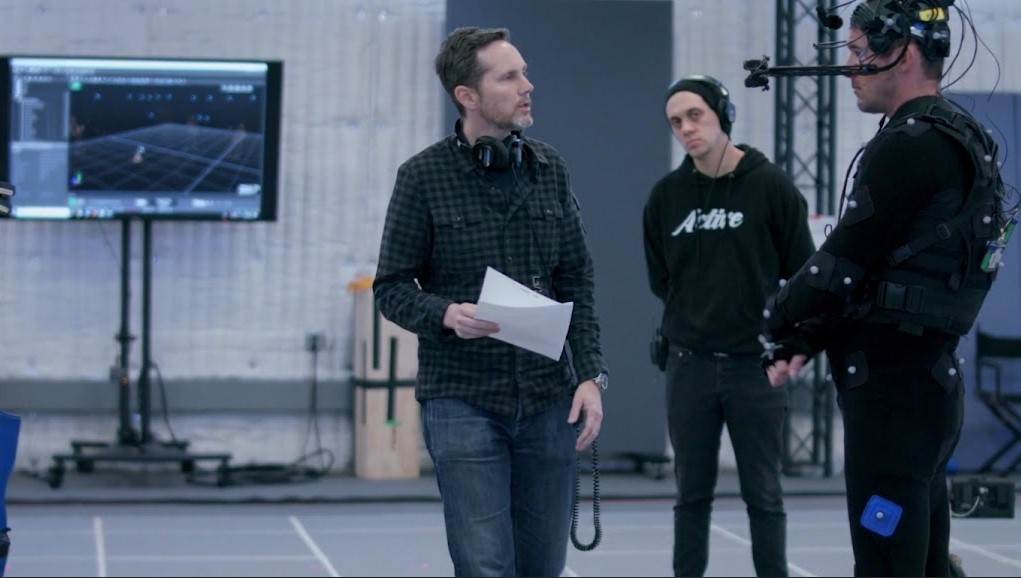
A black, skin-tight motion-capture suit. Small reflective tracking dots everywhere – no real equipment, but digital markers. You have to be clean-shaven, otherwise, the camera gets confused. And then there's that helmet camera, mounted right in front of your nose, capturing every one of your facial expressions. The entire “badass factor”? Completely gone. You look like you're in an 80s superhero tracksuit.
But that's not even the worst part.
The game environment doesn't exist. Not at all. You're standing in an empty, black hall, and your brain is supposed to imagine hundreds of enemy soldiers. Explosions. Helicopters circling above you. Buildings collapsing. All based only on a rough, unfinished 3D preview that the cameraman shows you on a monitor – before the take begins. Then that monitor is no longer useful to you. You perform the entire scene based purely on imagination and acting talent.
That doesn't just sound absurd – it is absurd. But that's precisely why it works when done correctly. It forces the actor to create the truth of the scene from within. And it is this inner truth that later, when all other teams have done their work, creates that magical spark.
Infinity Ward in the 1920s – The Genius Behind the Machine
Here comes the twist no one expects: Despite the gigantic corporate apparatus behind it – Activision, Microsoft, all the corporate layers – Sloan experiences a working atmosphere during the Call of Duty recordings reminiscent of Hollywood's pioneering years. The 1920s, the 1930s. Back then, when film was new and everything seemed possible. A time of experiments, of playful creativity, before the industry became a machine.
At Infinity Ward, Sloan recounts, people who genuinely love gaming work. Who passionately drive the medium forward. Who provide space for creativity. Who dare to experiment. Despite all the surrounding structure – real pioneering work still happens at the team level.
And the best part? Creative work in gaming isn't as isolated as in classic film. After the motion-capture recordings, Sloan visited rooms full of animators. Three floors. Developers working on his movements. Technicians analyzing his voice. People forming a team to turn a performance into a complete work of art. His facial expressions were translated into animations. His movements were synchronized with level design. His voice was woven together with sound design, music, and room acoustics. No single artist had all of this in mind – but together, something emerged that was greater than the sum of its parts.
That's the secret of Captain Price: It's not Barry Sloan's performance alone. Captain Price is what hundreds of people have created from Sloan's work. Animators, sound designers, level designers, composers – all have contributed their part to making this character iconic.
Captain Price: The Face of an Era
In the end, Captain Price is a character who shows why gaming is far from dead and why AI poses no real threat to genuine craftsmanship. Price feels real because real people, with real craftsmanship, created him. Not optimized by an algorithm, but handcrafted.
And the next time you see him during a playthrough of Modern Warfare – this grizzled veteran with the iconic mustache, giving his orders – you'll now know: Behind this man are hundreds of hours of genuine human creativity. And that's precisely why he sticks in your mind.
AI or genuine craftsmanship – what makes a gaming character like Captain Price unforgettable for you? Head to the comments! And if you liked the story: Share it with your crew.
Source: AJ. Buckley's YouTube Channel
Comments (0)
No comments yet — be the first to share your take.